Welcome to HelixForm
HelixForm is an ear molding system for newborns, developed through clinical experience and a commitment to providing personalized care from the very first days of life.
For parents and caregivers, pediatricians, and plastic surgeons.
20+ years
of clinical experience in newborn ear molding behind the design.

No complications reported in a 30-infant retrospective study


Simple & noninvasive

Controlled, adjustable pressure

Peer-reviewed research

Patent pending
Why early matters
In the first weeks of life, residual estrogen from the mother and high levels of hyaluronic acid keep a baby's ear cartilage unusually flexible. That makes it possible to guide a misshapen ear into a natural shape with gentle, steady pressure, without incisions or anesthesia.
As that flexibility fades, molding becomes less likely to work, and correction may later require surgery, often around age 5 or 6. An early evaluation by a specialist gives families more choices.
15–20%
of newborns are estimated to have a congenital ear abnormality.
≤30%
of ear deformations recognized at birth resolve on their own by 4–6 weeks. The rest usually need treatment.
5–6 yrs
a common age for surgical correction of ear differences, when the ear is near adult size.
Sources: Matsuo et al., Plast Reconstr Surg, 1984; Bhatti et al., Pediatrics in Review, 2021; Mejia et al., J Craniofac Surg, 2025.
System features
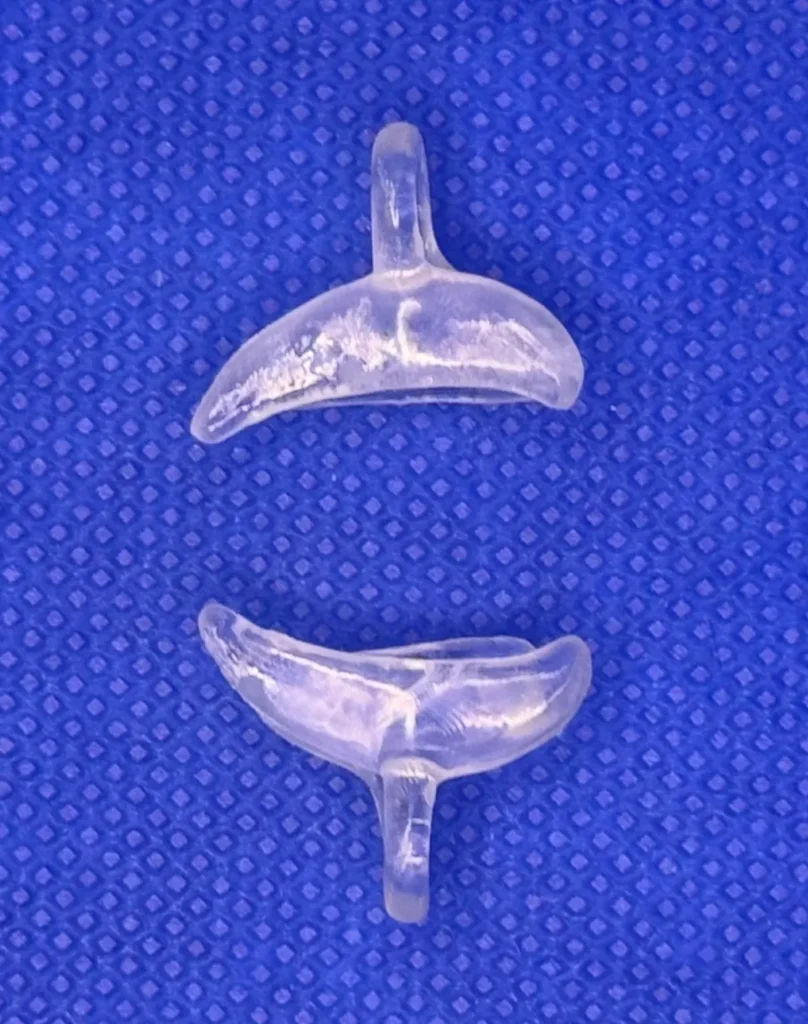
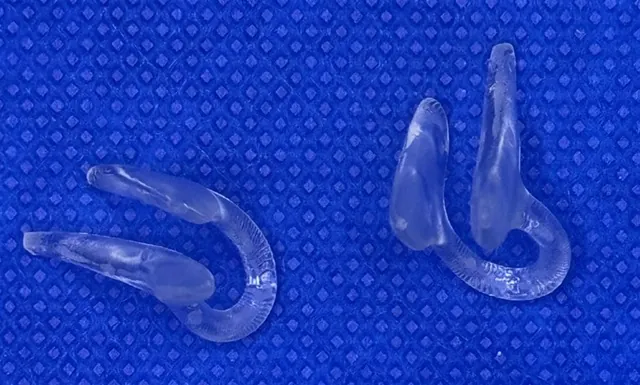
Each device is made from an impression of your baby's own ear. It applies targeted, adjustable pressure on the prominent cartilage to help create a smooth scapha and helix.

Simple and noninvasive: designed for ease of application and use.
Controlled pressure: allows pressure to be applied and adjusted to help correct a range of ear deformities.
Personalized treatment: adapts to each baby's ear shape and individual needs.
Care guided by experience: supports a more standardized approach to treatment, informed by clinical expertise.
Patent pending
The inspiration behind the design
Martha Mejía, DDS
Inventor of HelixForm
Presented at LATICFA 2026

“For more than 20 years, I have dedicated my work to ear molding in newborns, supporting families who want the very best for their babies. This experience, together with my desire to provide more personalized care, inspired me to develop a noninvasive system to correct a range of ear deformities.
My design grew out of clinical practice and careful attention to every detail. It is easy to use and allows treatment to be tailored to each baby's unique needs. Behind every innovation is a family placing their trust in us, and an opportunity to make a difference from the very first days of life.”
— Martha Mejía
How it works
The protocol shown is for Stahl's ear. Conchal crus uses a custom silicone insert for 6–8 weeks. The treating clinician adjusts timing for each baby.
01
A specialist examines the ear and confirms the deformity can be molded.
02
An impression of the ear is used to make a clip that fits it exactly.
03
The clip is worn for 2–3 weeks, followed by a plastic splint for about 6 weeks.
04
A cartilage-memory test confirms the new shape holds, with extra splint time if needed.
Video: the HelixForm clip for Stahl's ear, demonstrated on an ear model.
Conditions
In a deformation, every part of the ear is there but shaped differently, often by pressure before or after birth. Deformations tend to respond well to early, non-surgical molding.
Studied in published work
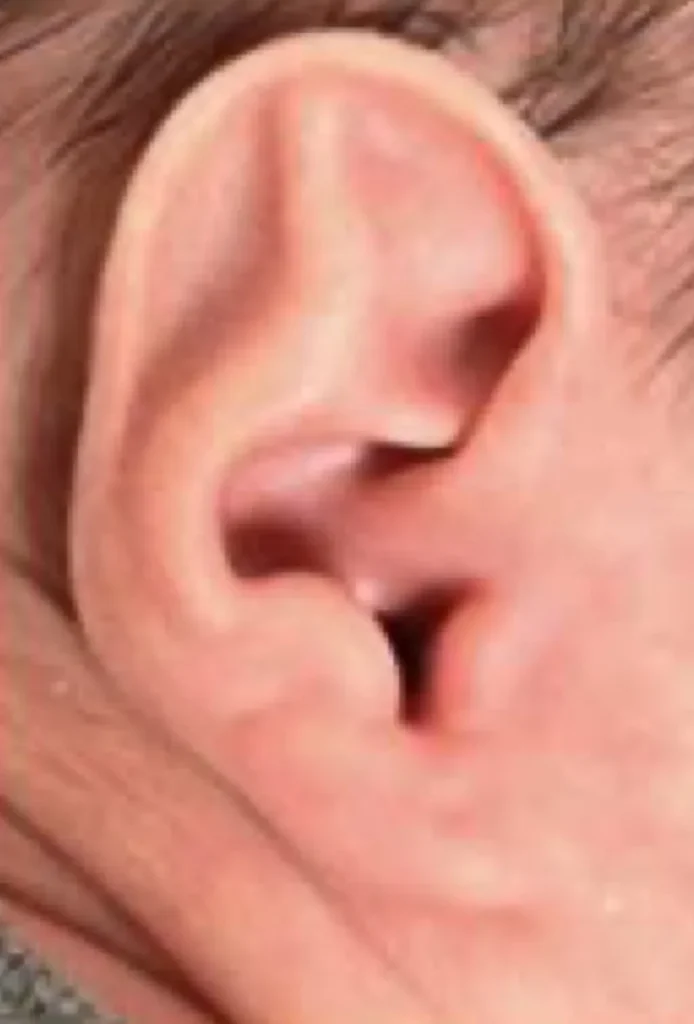
An extra ridge of cartilage runs toward the rim, giving the upper ear a pointed look.
Studied in published work
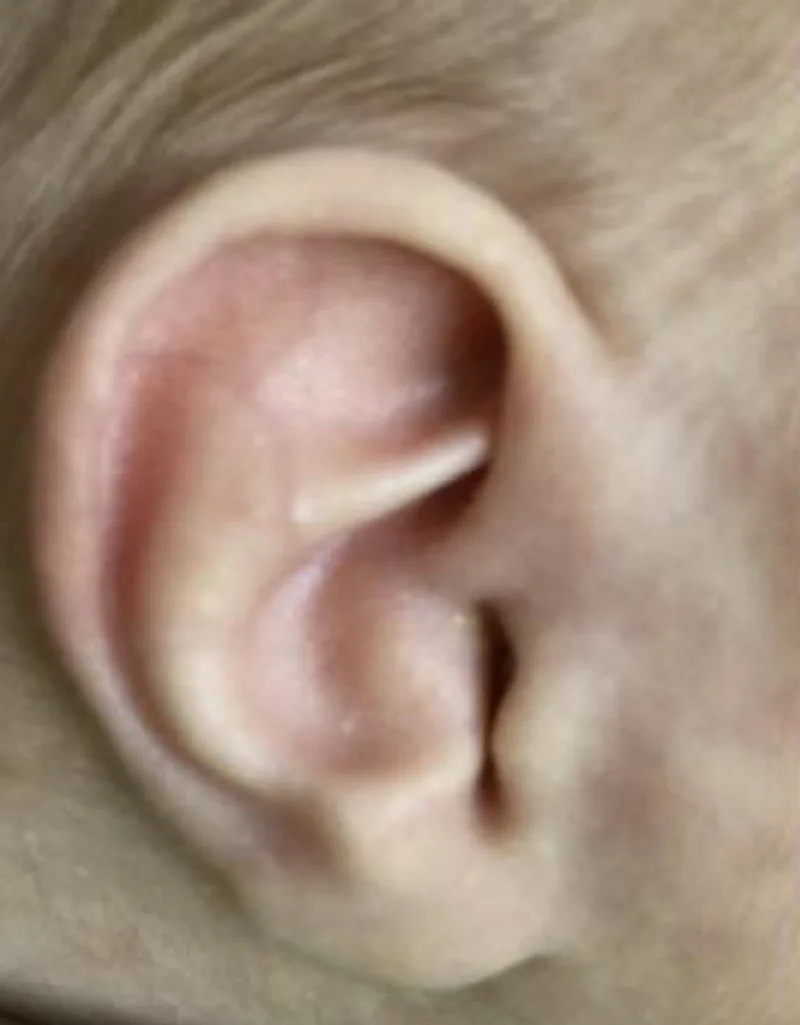
A ridge of cartilage crosses the bowl of the ear. Left untreated, it can later interfere with earbuds or hearing aids.
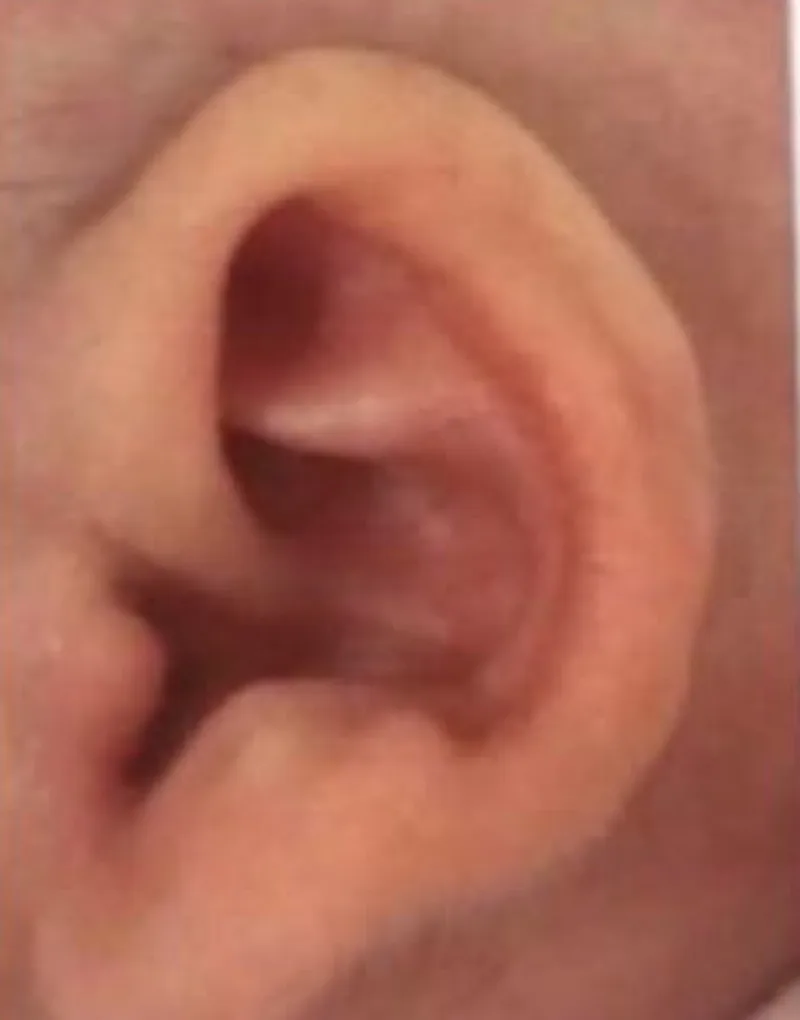
Seen in clinical practice
The rim is tight or contracted, which limits the normal growth of the upper ear.
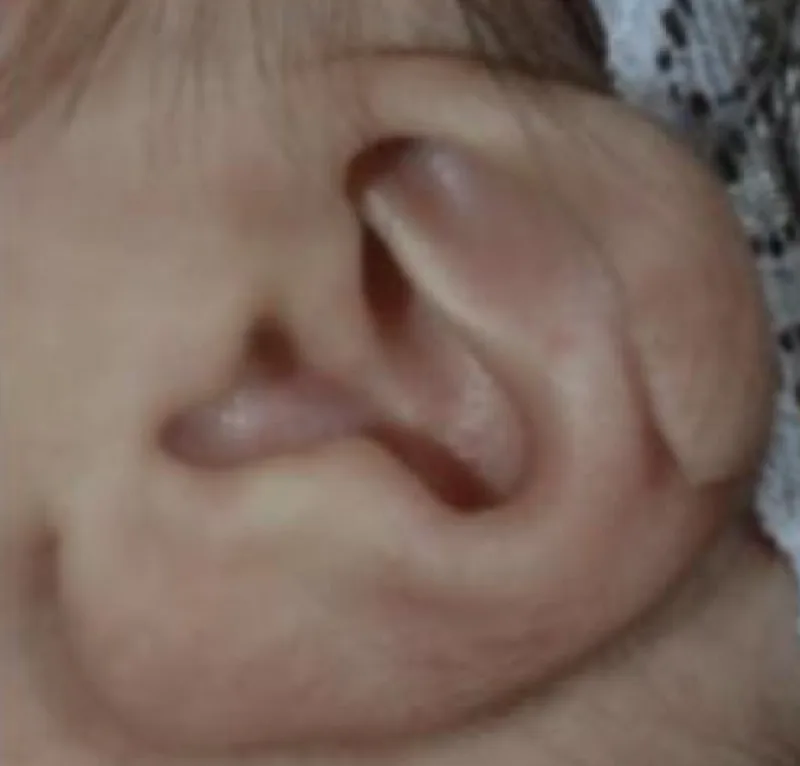
Seen in clinical practice
The top of the rim folds downward, so the upper ear looks droopy.
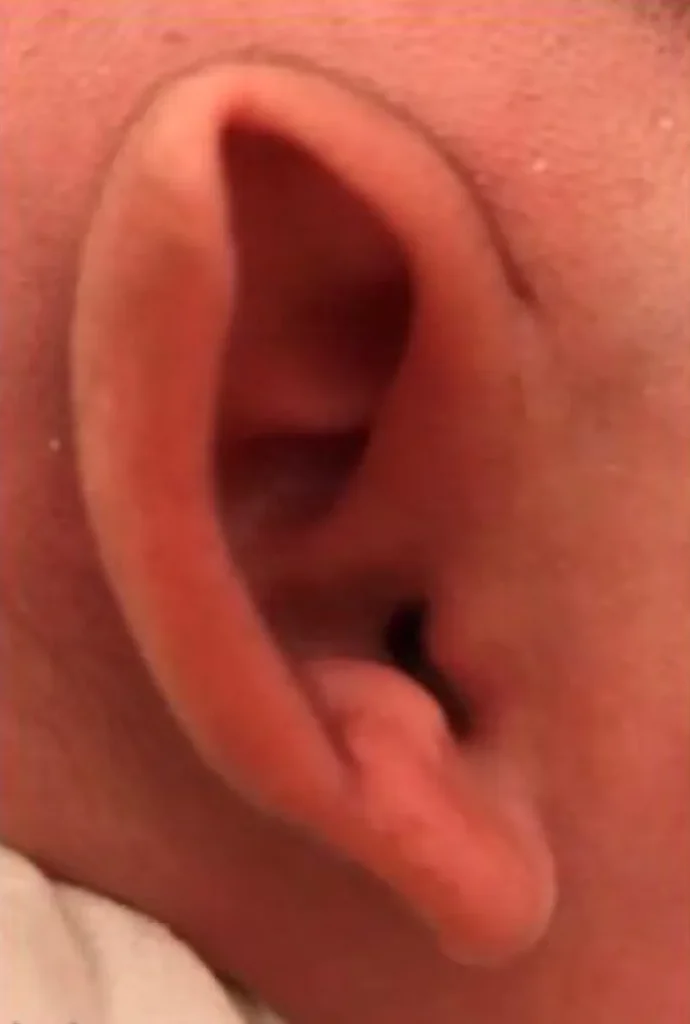
Seen in clinical practice
A small ear whose upper rim is rolled or folded inward, giving it a cup-like shape.
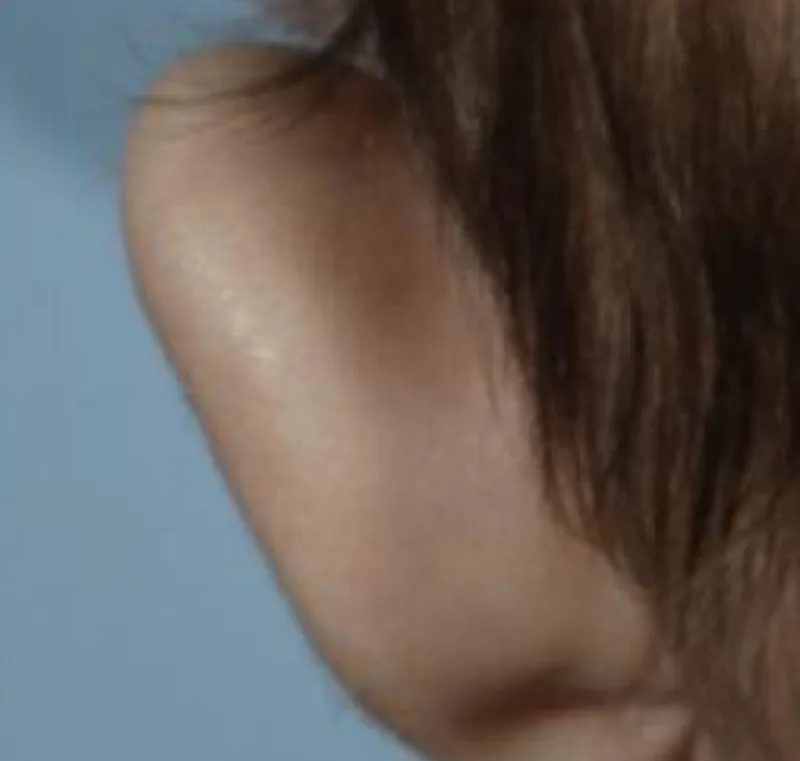
Seen in clinical practice
The ear sticks out from the head, often with a poorly defined fold (antihelix) or a large bowl (concha).
In microtia, anotia or cryptotia, parts of the ear are missing or underdeveloped. These need surgical reconstruction. In one published case report, early molding improved the shape of a microtic ear ahead of surgery, but it does not replace surgery.
Example clinical photos; individual results vary. Not sure what you're seeing? Send us a question and a specialist will guide you.
Results
Example clinical photos. Individual results vary.
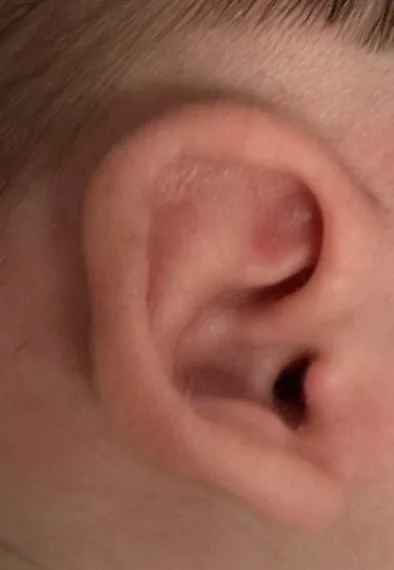
Before
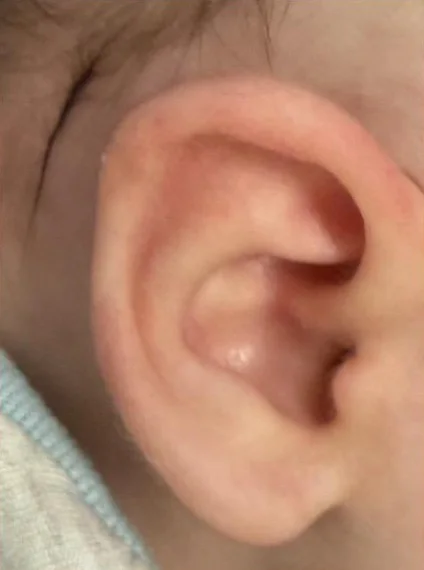
After
Example A · Upper ear deformity
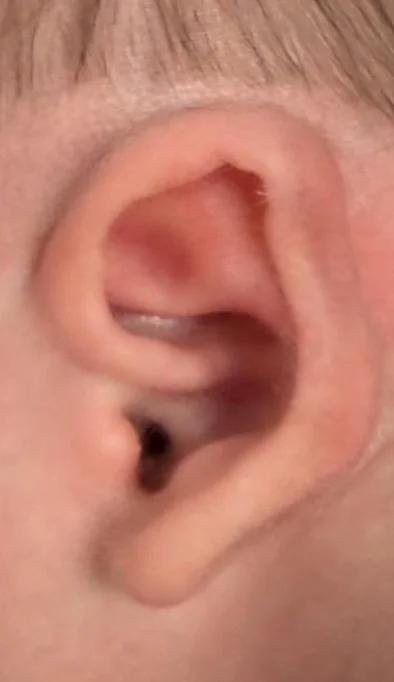
Before
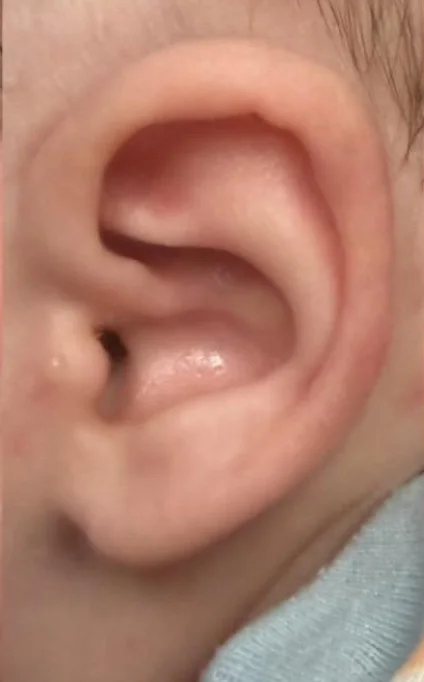
After
Example B · Ear deformation
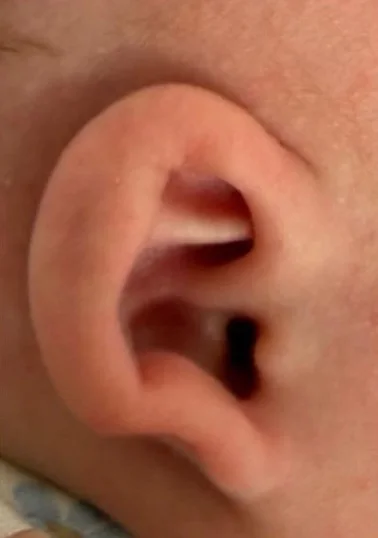
Before
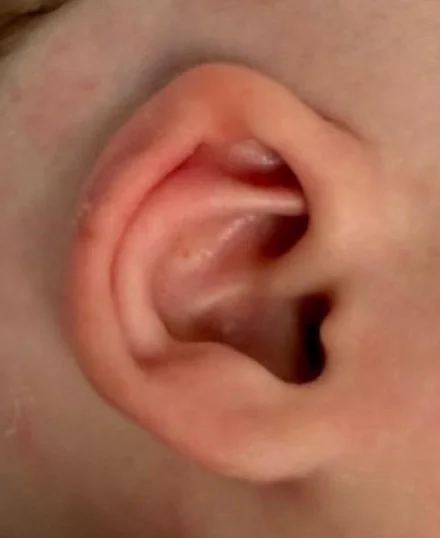
After
Example C · Constricted ear
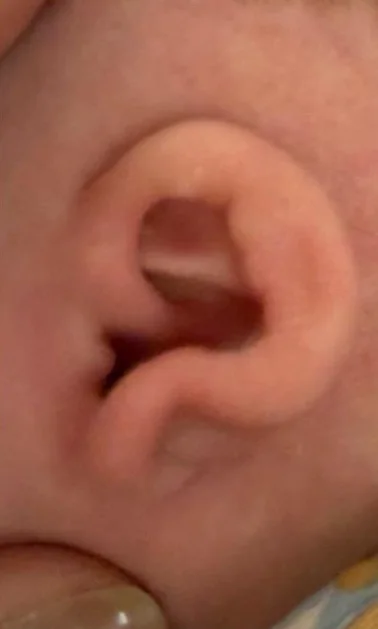
Before
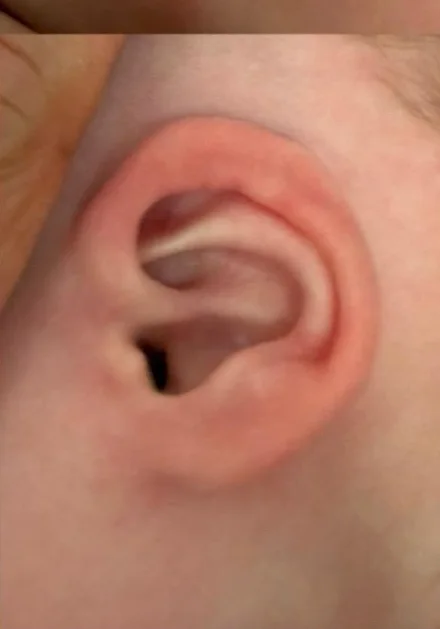
After
Example D · Constricted ear
39
ears treated in 30 infants (2018–2023)
88%
of photo ratings for Stahl's ear results were "excellent" or "good"
84%
of photo ratings for conchal crus results were "excellent" or "good"
0
complications reported in this study
Retrospective study of 30 infants at one center. Before/after photos were rated by 14 reviewers (health professionals and medical students) not involved in care. Small sample; results may not apply to every baby. Mejia M, et al. J Craniofac Surg. 2025. DOI 10.1097/SCS.0000000000011799
What to expect
Ear molding works best when families know what to expect. Clear expectations and good parent education make a real difference.
Source: Mejía M. 20 years of clinical experience with neonatal ear molding. LATICFA, 2026.
Results are good, but most babies need a retention phase so the new shape holds.

Moisture is the biggest enemy of ear molding. Keeping the ear and device dry is essential.

After about six weeks of molding, the shape is maintained but usually doesn't improve further.
Small sores or redness, usually from moisture, are uncommon and tend to heal quickly with a device adjustment or cream.

Molding a baby with active eczema is very difficult. Your specialist will advise on timing.
Molding can improve the shape, but if the back of the ear's bowl is large, the ear may still stick out.
Research & publications
J Craniofacial Surgery · 2025
Mejia M, Bercu C, Baaj H, Agudelo M, Policherla R, Steinberg JP.
Pediatrics in Review · 2021
Bhatti SL, Daly LT, Mejia M, Perlyn C.
Cureus · 2025 · Case report
Chaudhry AS, Shtanko Y, Wolfe SA, Lewin S, Mejia M.
For parents & caregivers
You're not alone, and the earlier you ask, the more options you have. Tell us your baby's age and share what you've noticed. We'll help you understand the next step.
Ask a specialistFor healthcare professionals
Early referral by pediatricians, neonatologists and maternity teams is key to success. Refer infants early, or request clinical information and training on the HelixForm protocol.
Contact the clinical teamRequest information
Whether you're a parent or a clinician, send us a message. We usually reply within [RESPONSE TIME].

Miami, FL